Where does moderation fail players today, and what should a new platform do differently?
The platform let players connect in many kinds of spaces, from small groups of friends to large public communities. The team was drafting its moderation strategy and had working assumptions about what players wanted. It needed evidence on what goes wrong for players today, and on how far to go: what to automate, what to leave to people, and where moderation stops being welcome.
- Question 1 · Pain points and needsWhere do moderation and toxicity control fail players today, and what do they need instead?
- Question 2 · GroupsHow do those expectations change across spaces, from small friend groups to public communities?
In-depth interviews, starting from players' own experiences
Asking players what they want only goes so far, so the interviews started from their own experiences of toxicity and of moderation on the platforms they used, and the pain points behind them. I also built the team's working assumptions into the guide, so every finding would answer something the team already believed.
The players most often targeted by toxicity: women, LGBTQ+ players and people from racial minorities.
So the findings reflected players as a whole, not only those most affected.
5 women and 5 men, active across the platforms where gamers meet.
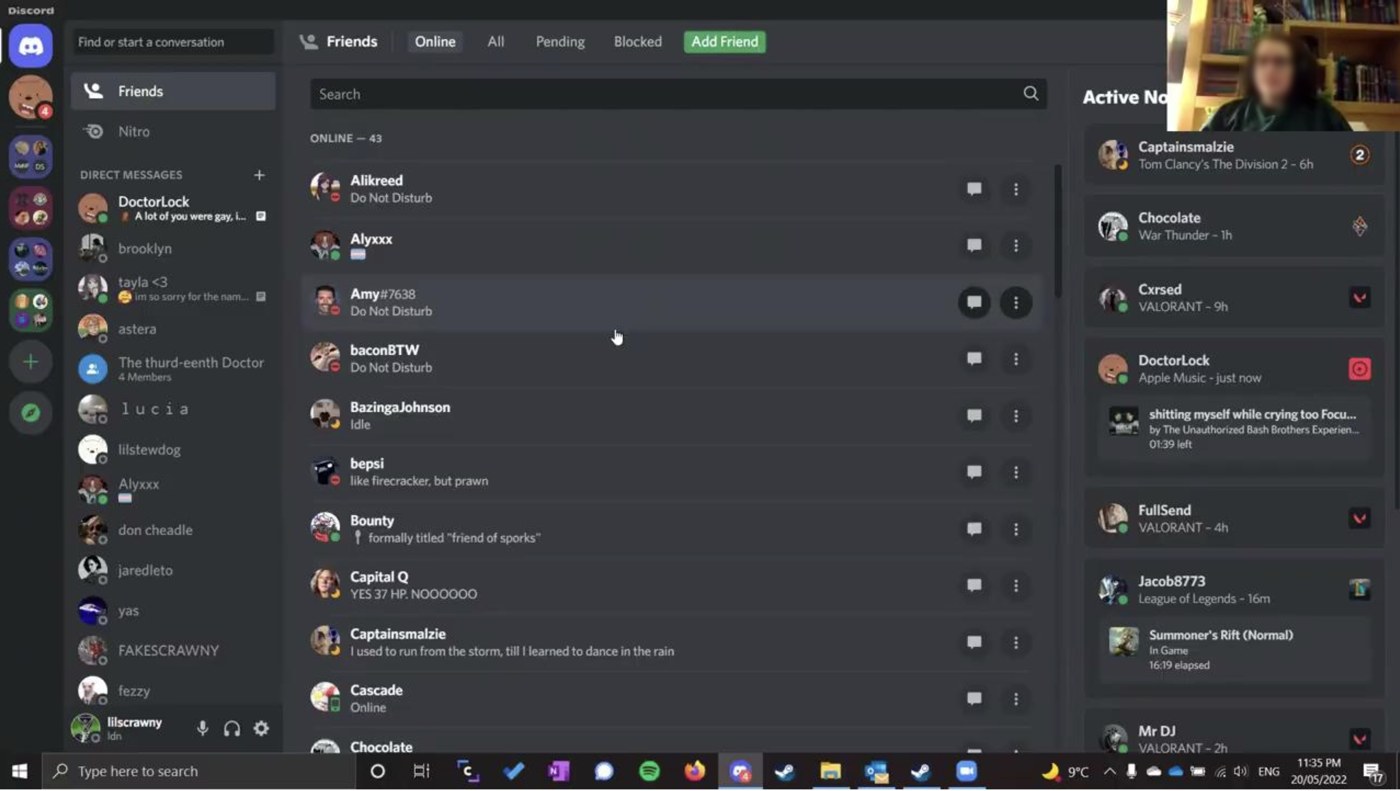
Findings and impact are password protected
To respect client confidentiality, the rest of this case study is shared on request.
Email me for access