What does sharing media add to a video call, and what gets in the way?
In 2013, video calls were becoming an everyday way to stay close to family and friends, yet sharing something during a call meant sending a link or an attachment, or sharing a screen that only one person could control. Little was known about how often people shared during calls, or what it added.
- Question 1 · Current habitsHow and why do people share media during calls, and what gets in the way?
- Question 2 · ConnectionDoes sharing media make calls more enjoyable and emotionally connecting?
- Question 3 · UsefulnessDoes it make calls more useful, and which kinds of media add most?
Interviews, a survey, a working prototype and a lab study
The study ran in three phases, each building on the last. Interviews with 20 people showed how they shared media during calls, and the workarounds they relied on. One woman circled details in her festival photos while sharing her screen; her mother could only point with words.
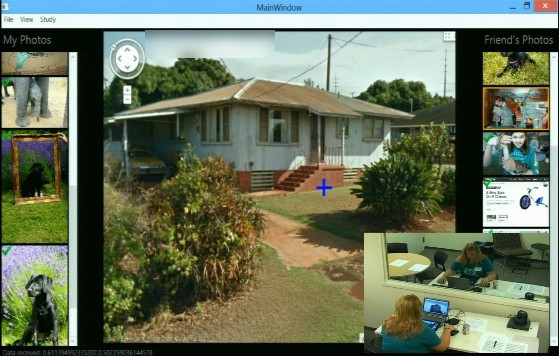
A survey of 125 people, across ages 18 to 65, measured how common this was and what people wished they could do. With a designer and a developer, I then built Media2gether, where both people see the same media and each has their own pointer.
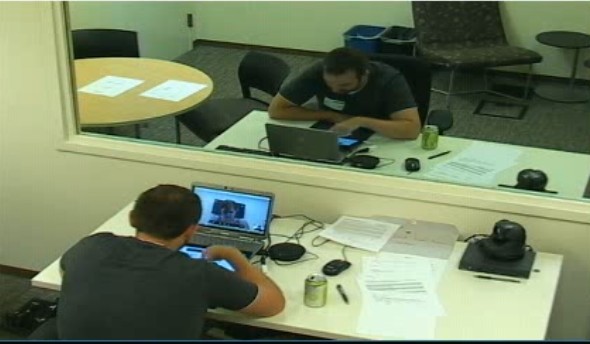
In the lab, 10 pairs of friends, couples and family talked over Skype from separate rooms in four kinds of call: a plain call, and calls sharing photos, social posts or a browser. Each person brought ten photos to talk about, half of them about something the pair shared. Questionnaires after every call, rankings, observation and interviews showed how each call felt.
Photos made calls more emotional; an open browser made them more useful
Across the survey and the lab, sharing media changed what a call was for. What people shared decided whether it brought them closer or helped them get things done.
Photos turned calls into stories
The most emotional moments came from the stories and memories that media sparked, sometimes only loosely related to it. Photos chosen for one person felt special in a way a social feed didn't, and reminiscing could turn into plans: one pair, looking at a photo from a trip they had taken together, started planning the next one.
Media drew eyes away from faces, without costing closeness
With media on screen, people watched their partner less, and rated a plain call highest for reading each other's emotions. Yet with photos or a browser, they felt just as close as on a plain call, and photos came close for feeling supported. The stories made up for the lost eye contact.
Try it: how did the four kinds of call compare?
Select a kind of call to see what happened in the lab.
An open browser was the most useful
Usefulness was the clearest benefit in the survey. In the lab, only 3 of 20 participants ranked the plain call most useful, and 11 ranked the browser first, for its flexibility: pairs watched videos, looked things up, planned trips and shopped. Planning and shopping gained most from hearing the other person's view.
Tools let only one person steer
People shared by sending links and attachments, or by sharing a screen that gave one person control and left the other to point with words. What participants valued in Media2gether was seeing the same thing, with both able to choose and point.
Easy sharing could mean more, and longer, calls
Most survey respondents who had shared media found calls more engaging and more enjoyable. In the lab, signs of boredom appeared only in the plain call, and participants said an easy way to share would lead to more frequent and longer calls, most strongly for photos and the browser.
Make sharing a two-way part of the call
Sharing media made calls more useful, more enjoyable and, with personal photos, more emotional. To get there, both people needed to see the same thing and act on it together, without losing sight of each other.
- The same view for both, with shared control and a pointer each
- Screen space split evenly between faces and media
- One flexible shared space, not a separate tool for each kind of media
- A private space for each contact, to gather photos ahead of a call
- Mutual friends' posts as conversation starters
Recommendations for Skype, and a peer-reviewed paper
I presented the findings and recommendations to Skype's research and design team. The work was also written up as an internal technical report, and published as a peer-reviewed paper at ACM GROUP 2014 with my Microsoft Research mentors.