
How do families decide what children play, and where do parents lose sight of it?
For children, apps mostly meant games. For parents, games were one part of a wider worry about devices. To design supervision that families would actually use, the team needed to see how games enter a child's device, how children play, and what parents worry about and do.
- Question 1 · Getting gamesHow do new games reach a child's device, and what part do parents play?
- Question 2 · PlayingWho do children play with online, and do parents know?
- Question 3 · ConcernsWhat worries parents about their children's gaming, and what rules follow?
- Question 4 · SupervisingHow do parents check that rules are followed, and what would help?
Home visits, an in-home drawing activity and video diaries
Before the home visit, each child drew a game they would love to play, and a parent recorded them explaining it. A child's ideal game showed how they thought about games in their own terms: how it differed from the games they already played, who they wanted to play with, and how they would share it with others. In the home, we interviewed a parent and the child separately. The child then showed us where and how they usually play.
After the visit, parents recorded their child right after a gaming session, while it was still fresh. Comparing what parents said with what children said and showed is what revealed the gaps.
In the San Francisco Bay Area.
Girls and boys, spread across three age groups.
Children who played mobile games on a phone or tablet every day.
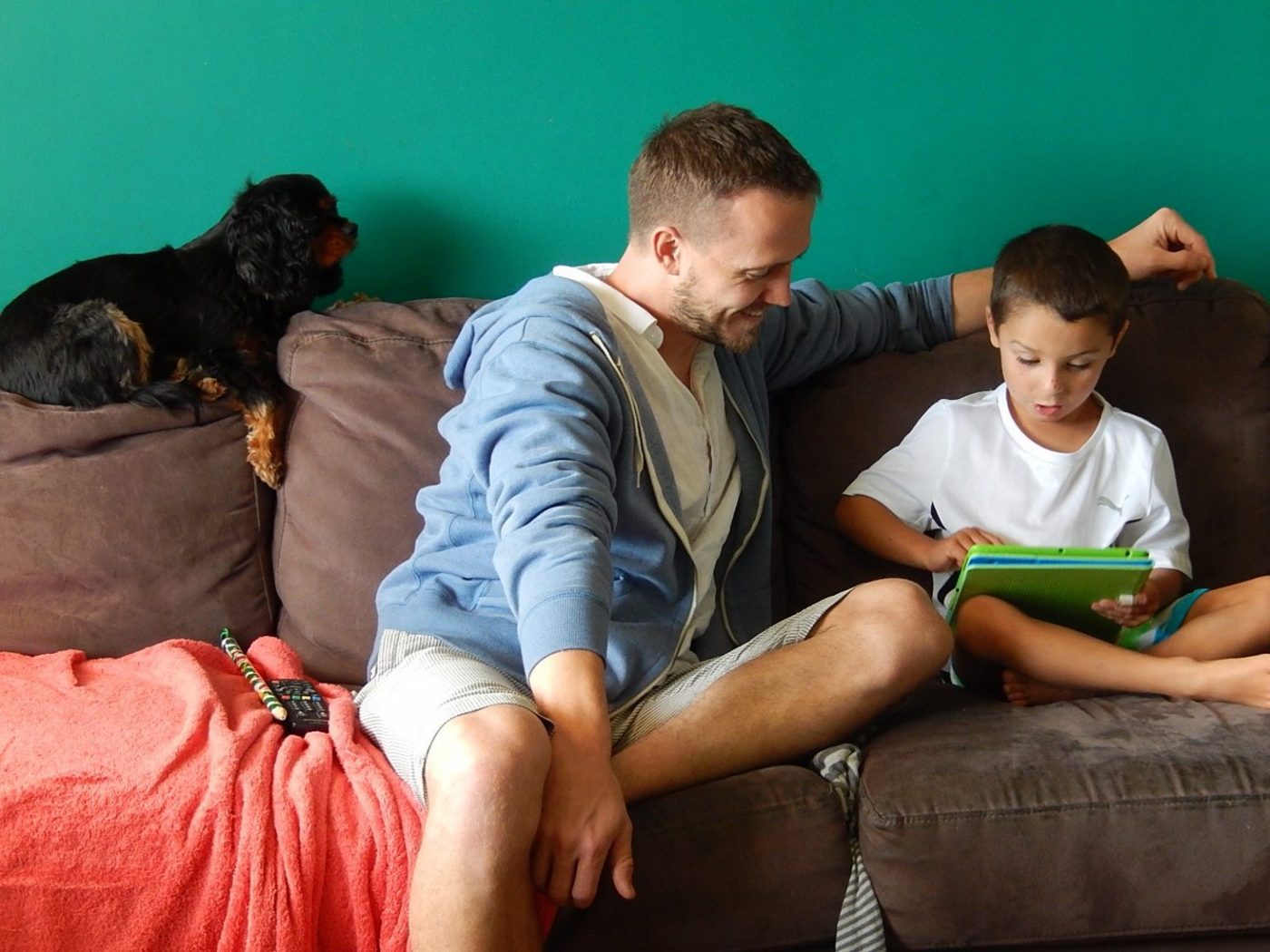
Parents controlled the download; the risks came after it
Most parents checked a game once, before approving the download, and rarely again. Meanwhile children were taking over: within months of getting a device, often from as young as five, they found and chose games themselves. The risks parents worried about played out in everyday play.
Getting games
Parents lost track of what children played
Children switched between many games, found through app store charts, friends and gamers on YouTube. Parents named fewer games than their children actually played, and remembered mainly favourites, and games that made them worried.
One check, at the door
Most children needed a parent to approve a download, by entering the password or approving it remotely. Parents judged a game from reviews, descriptions, ratings and screenshots, worried most about violence, and didn't fully trust reviews. After the download, few checked again, and where children knew the password, there was often no check at all.
Parents drew the line at in-app purchases
All parents expected children to ask before buying an app, and most were flexible about paid apps. Very few accepted in-app purchases, even from a child's own allowance.
Playing
Games were social, and often collaborative
Most children preferred playing with someone, on one device, side by side or remotely. Many younger children valued teaming up over competing. Parents welcomed play with siblings, cousins and friends, and saw it as a way to stay in touch.
Try it: and when children played with strangers?
Select a group of parents to compare their view with what their children did.
Parents wanted usernames, but didn't know them
Most children used a username in at least some games, often because the game required one. Parents preferred it to a real name, and many set one rule: nothing identifying in it. Yet most parents didn't know which usernames their children used, and some younger children forgot theirs, so a parent had to keep track.
Concerns
Time worried parents most, and what it did to their children
Parents' main worry was how long children spent on devices, and the changes they saw: anger when play stopped, homework pushed aside, less time being active. Strangers, violent content, cyberbullying and other players' language came next. YouTube, the children's most popular app, was where parents felt they had the least control. A few had no concerns, as long as school and activity didn't suffer.
Rules set when, where and for how long
Daily limits ranged from half an hour to a few hours, with more freedom at weekends. Devices were off limits near bedtime, at meals and before homework, and some children could play only in shared rooms. Rules about content were mostly settled at the download; rules about time were enforced by taking the device away, as a punishment or a routine.
Supervising
Parents supervised by hand, and wanted help
Parents checked in person: looking over a child's shoulder, keeping devices in shared rooms, or picking up the device for a spot check. Only a few used a monitoring app. Many wanted a way to check in without taking the device. Most children were comfortable being supervised; the few who minded read it as a lack of trust.
Move supervision from the download to everyday play
Parents' controls centred on approving downloads, while their worries lived in everyday play. And as children grew more independent, parents lost sight of it. Supervision needed to follow the child's play over time, and to work in a way children understood and accepted.
- Set time limits and check in remotely, without taking the device
- See time spent and which games a child plays
- Know when a game lets children talk to people they don't know
- Supervision children can see and understand
- Clear rules, so children don't fill the gaps themselves
- Controls that adapt as children grow older
Evidence for Family Link before launch
I shared the findings with the Family Link team as part of its research before launch. The findings contributed to the team's understanding of how parents want to manage their children's gaming, and where supervision mattered most to families: beyond the download, in everyday play, and in a form children would accept.